Used Car Buying Checklist UK 2026: 15 Things To Check Before Buying A Used Car
Buying a used car can save a significant amount of money compared with buying new, but the wrong purchase can quickly become expensive.
A car may look clean, drive well during a short test drive and still have a history that deserves closer investigation. Previous MOT problems, inconsistent mileage, outstanding finance, insurance write-off records, poor maintenance or documentation issues can all affect your buying decision.
That is why a proper used car buying checklist should combine physical inspection with documentation and vehicle-history research.
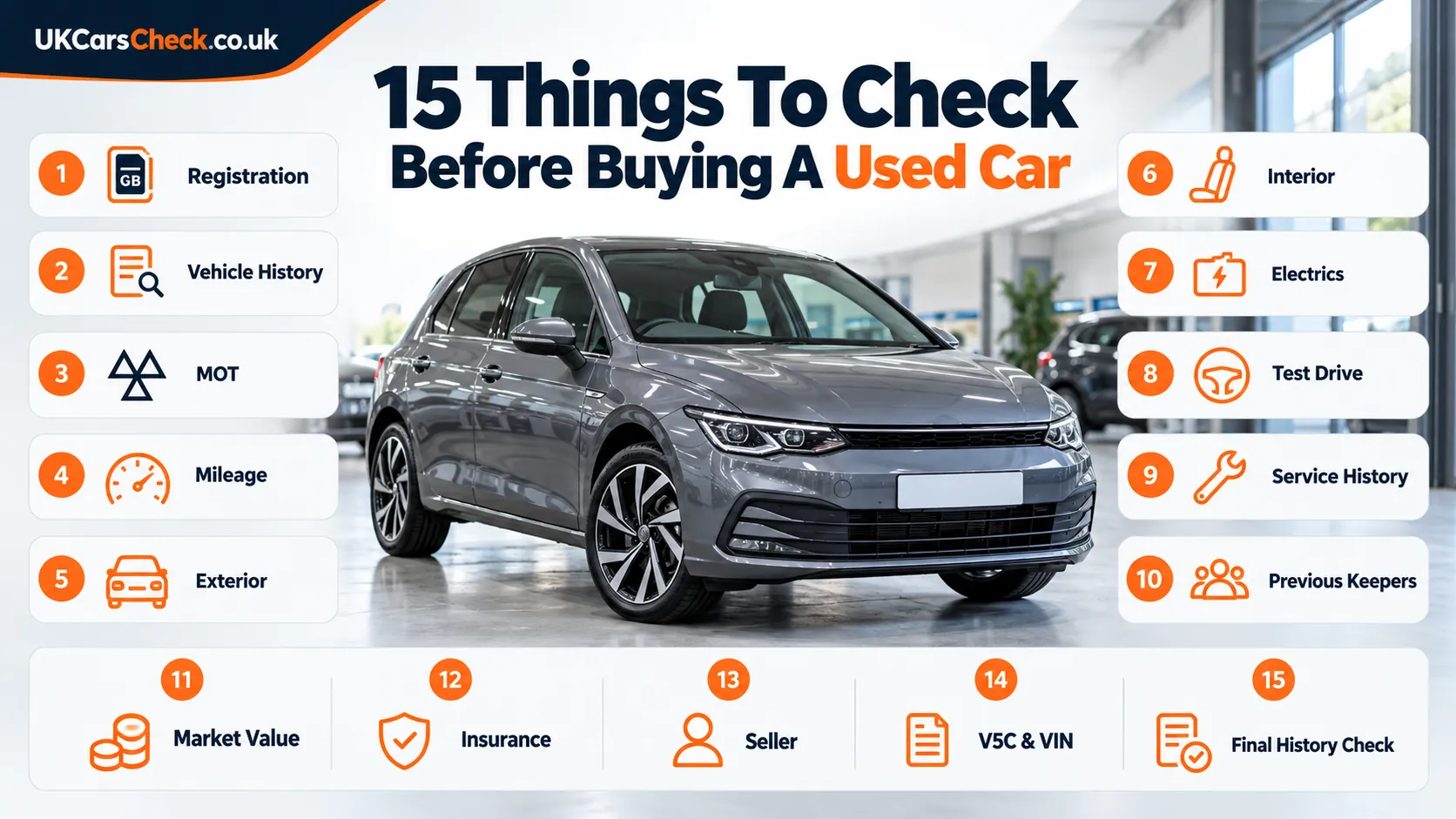
Here are 15 important checks to make before buying a used car in the UK.
1. Check the Vehicle Registration Number
Start with the registration number.
Make sure the registration displayed on the vehicle matches the registration shown in the seller's documents and any vehicle information you obtain.
Use the registration to research basic vehicle details and available history before making a commitment.
2. Run a Vehicle History Check
Physical inspection tells you about the car you can see. A vehicle history check can help you investigate information that may not be obvious from appearance alone.
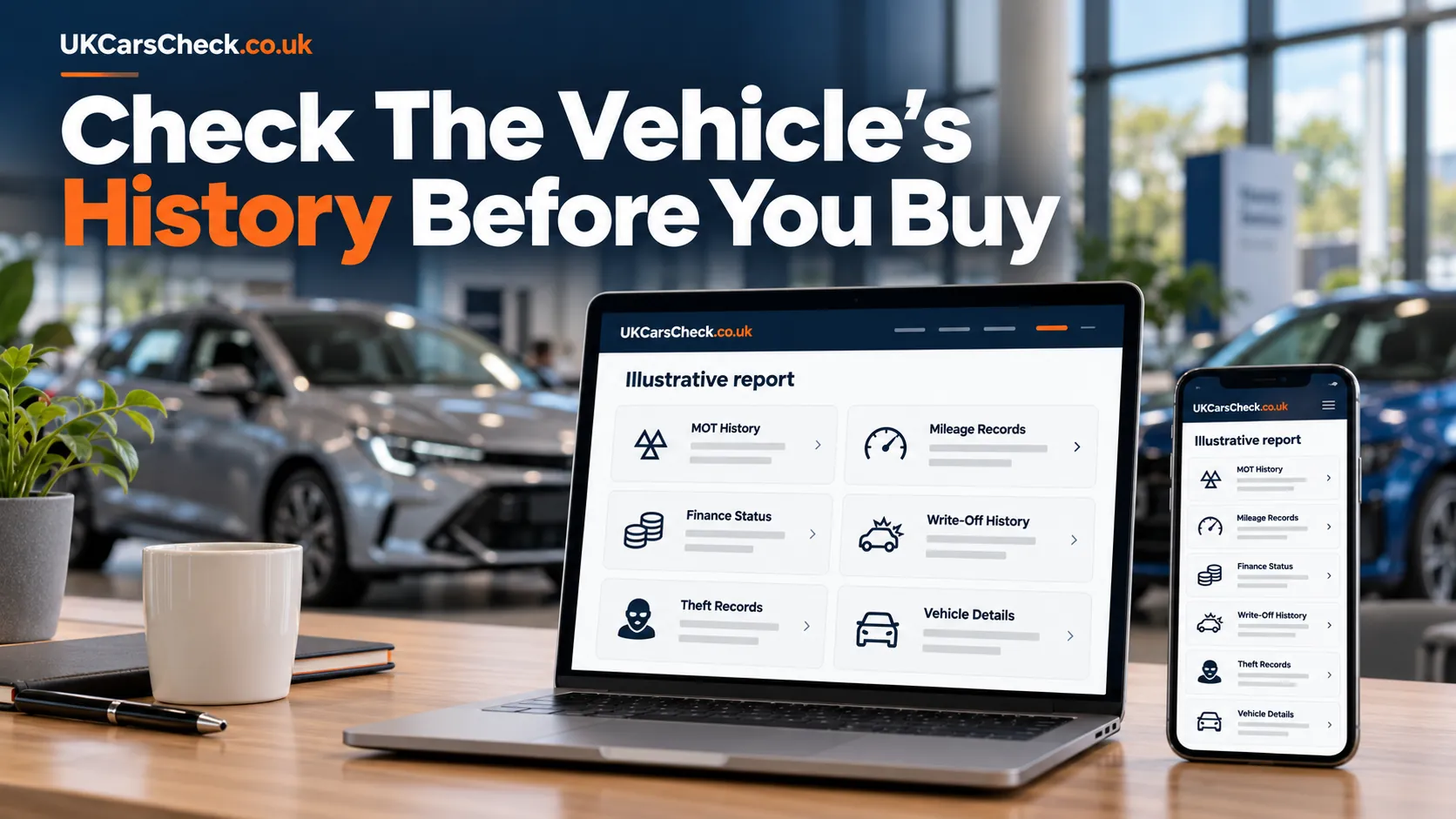
Depending on the report and available data, useful checks may include:
- MOT history
- Mileage records
- Outstanding finance information
- Insurance write-off information
- Theft-related records
- Previous keeper information
- Vehicle specifications
Before paying for a used car, compare the report information with what the seller has told you. You can compare our report packages to see which checks are included at each level.
Researching a used car right now?
Enter the registration to see what records are available for the vehicle before you speak to the seller again.
3. Review the MOT History
A car's MOT history can provide useful clues about how it has been maintained over time.
Do not look only at whether the latest MOT passed.
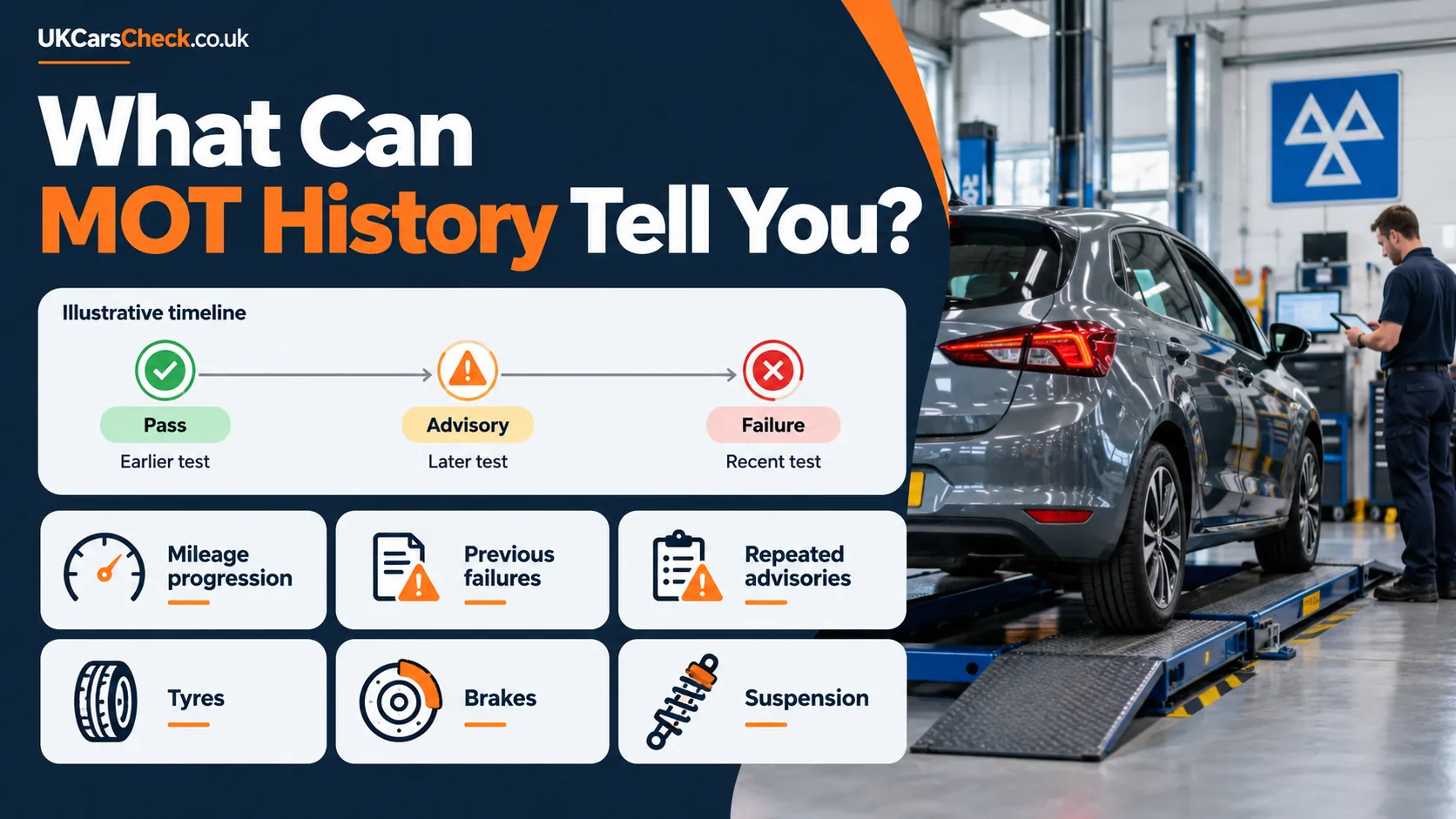
Review previous tests for:
- Repeated advisories
- Brake issues
- Tyre problems
- Suspension faults
- Corrosion
- Lighting problems
- Mileage progression
Repeated advisories can be particularly useful because they may show problems that have persisted across several MOT tests.
You can view a vehicle's past MOT results, including recorded mileage, using the official GOV.UK MOT history service.
4. Verify the Mileage
Mileage has a significant influence on the value of many used vehicles.
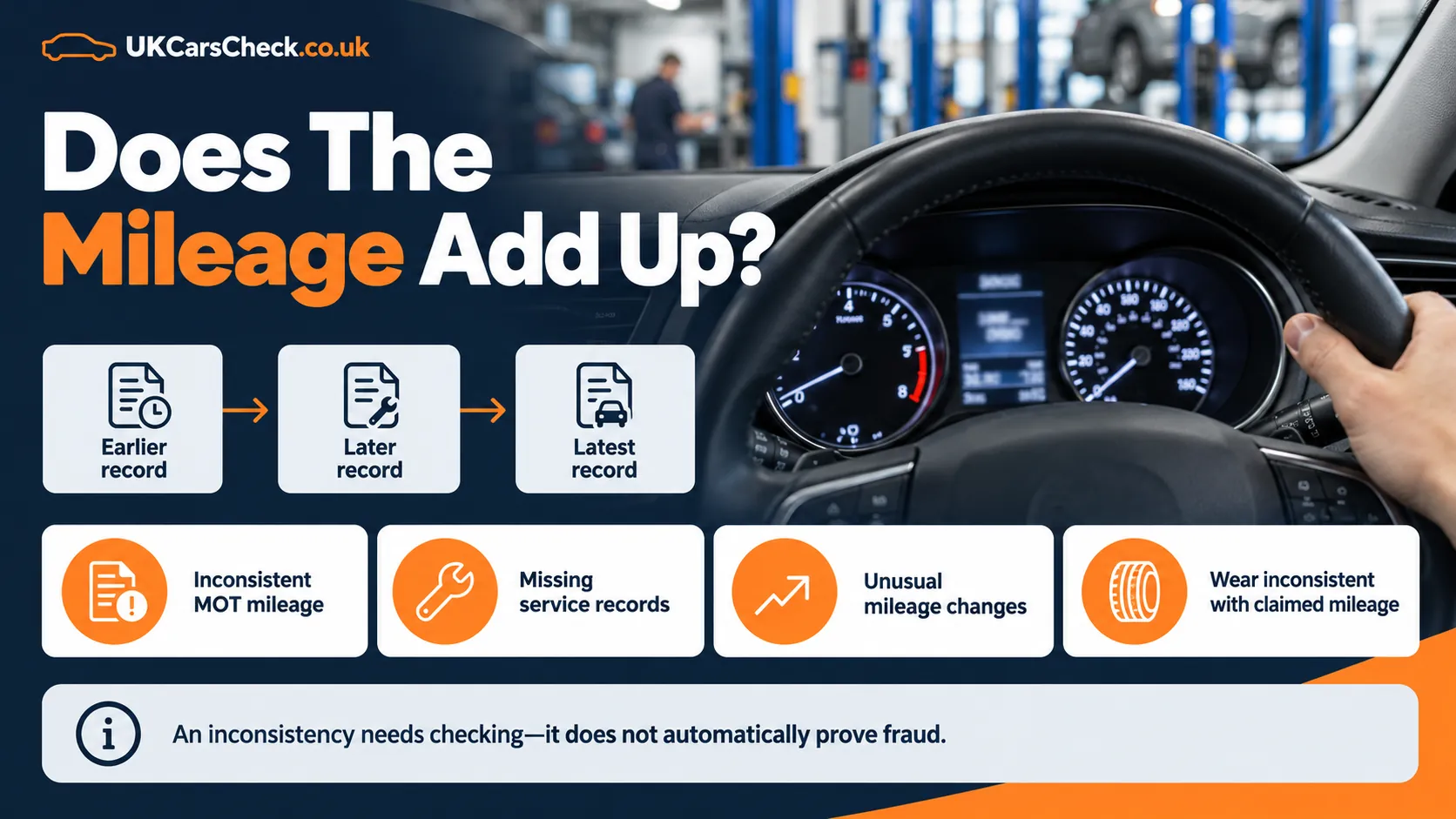
Compare the mileage displayed on the dashboard with:
- Historical MOT mileage
- Service records
- Maintenance invoices
- Vehicle-history information
Mileage should generally form a logical progression over time.
An inconsistency does not automatically prove mileage manipulation, but it deserves investigation before purchase.
Do the MOT records and mileage line up?
A UKCarsCheck report lets you review available MOT and mileage records alongside finance and write-off information in one place.
5. Inspect the Exterior Carefully
View the vehicle in good daylight whenever possible.
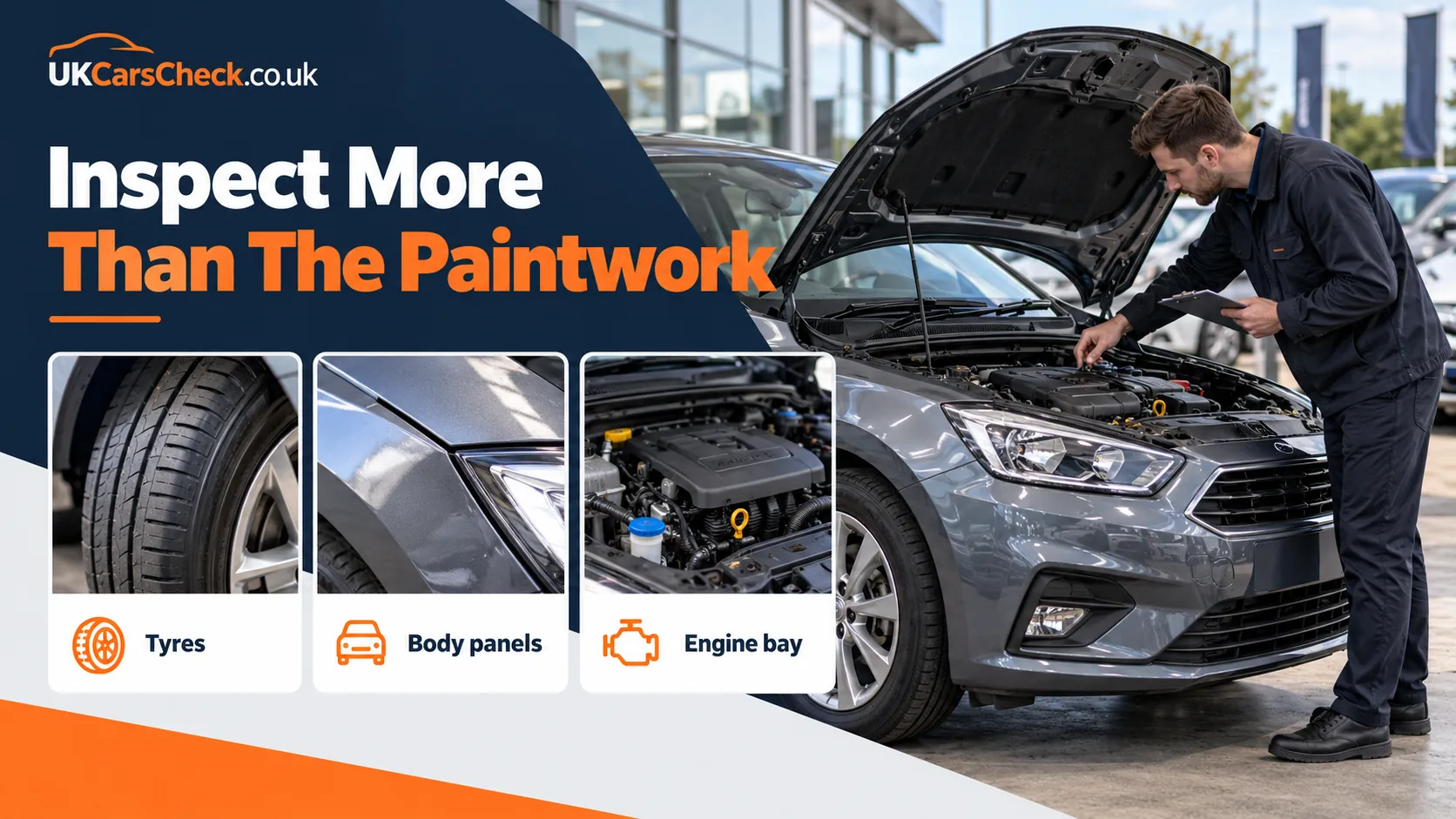
Look for:
- Dents
- Scratches
- Rust or corrosion
- Uneven paint
- Overspray
- Misaligned body panels
- Unusual panel gaps
- Damaged lights
- Windscreen chips or cracks
Different paint shades or unusual panel alignment can sometimes indicate previous body repairs.
Do not assume every repair means the vehicle should be rejected. Instead, establish what happened, how serious the damage was and whether repairs were completed properly.
6. Inspect the Interior
The interior can reveal how heavily a vehicle has been used and how well it has been cared for.
Check:
- Seats
- Seat belts
- Steering wheel
- Pedals
- Dashboard
- Carpets
- Headlining
- Controls
- Warning lights
Compare the amount of wear with the vehicle's claimed mileage and age.
For example, unusually heavy wear combined with unusually low recorded mileage may justify further investigation.
7. Test the Electrical Features
Modern vehicles can contain expensive electrical systems.
Test as many features as possible, including:
- Electric windows
- Central locking
- Air conditioning
- Heating
- Infotainment
- Bluetooth
- Parking sensors
- Reversing camera
- Heated seats
- Electric mirrors
- Cruise control
- Dashboard displays
A relatively small electrical fault can sometimes become an expensive repair.
8. Take a Proper Test Drive
Whenever legally and practically possible, test drive the car before buying.
Pay attention to:
Engine
Listen for unusual noises and check whether acceleration feels smooth.
Brakes
The car should brake predictably without excessive vibration or pulling strongly to one side.
Steering
Check for unusual noises, excessive play or unexpected vibration.
Gearbox and Clutch
Manual gear changes should feel appropriate and the clutch should operate normally. Automatic transmissions should change gears without obvious abnormal behaviour.
Suspension
Listen for knocking, rattling or other unusual sounds when travelling over uneven surfaces.
If you are unsure about the mechanical condition, consider an independent professional inspection.
9. Review the Service History
A documented maintenance history can help you understand how the car has been cared for.
Look for evidence of:
- Routine servicing
- Oil and filter changes
- Timing belt or chain-related work where relevant
- Brake maintenance
- Tyre replacement
- Major repairs
- Manufacturer-recommended maintenance
Check invoices and records rather than relying only on a seller's verbal description.
10. Consider the Number of Previous Keepers
The number of previous keepers is only one part of a vehicle's story.
A car with several previous keepers is not automatically a poor purchase, just as a one-owner vehicle is not automatically problem-free.
However, unusually frequent changes of keeper can justify asking additional questions.
Combine ownership information with MOT, mileage, service and vehicle-history information.
11. Compare the Asking Price With the Market
Compare the vehicle with similar cars of the same:
- Make
- Model
- Age
- Engine
- Trim
- Mileage
- Condition
Be particularly cautious when a vehicle is substantially cheaper than comparable examples without a convincing explanation.
A bargain is only a bargain if the vehicle itself checks out.
12. Check Insurance Costs Before Buying
Do not wait until after purchasing the car to discover what it costs to insure.
Insurance premiums can vary substantially depending on the vehicle and driver.
Get insurance quotations before committing to the purchase.
Also consider:
- Vehicle tax
- Fuel consumption
- Servicing
- Tyres
- Expected repairs
- Depreciation
The purchase price is only part of the real cost of owning a car.
13. Take Extra Care When Buying Privately
Private purchases can offer good value, but buyers should perform careful checks.
Potential warning signs include:
- Pressure to pay immediately
- Seller unwilling to answer reasonable questions
- Inconsistent information
- Missing documentation
- Vehicle not being available at an expected address
- Seller refusing reasonable inspection
- Price significantly below comparable cars
Never allow urgency to replace proper due diligence.
14. Check the V5C and VIN
Review the V5C registration certificate carefully.
Remember that the V5C identifies the registered keeper; it is not, by itself, proof of legal ownership.
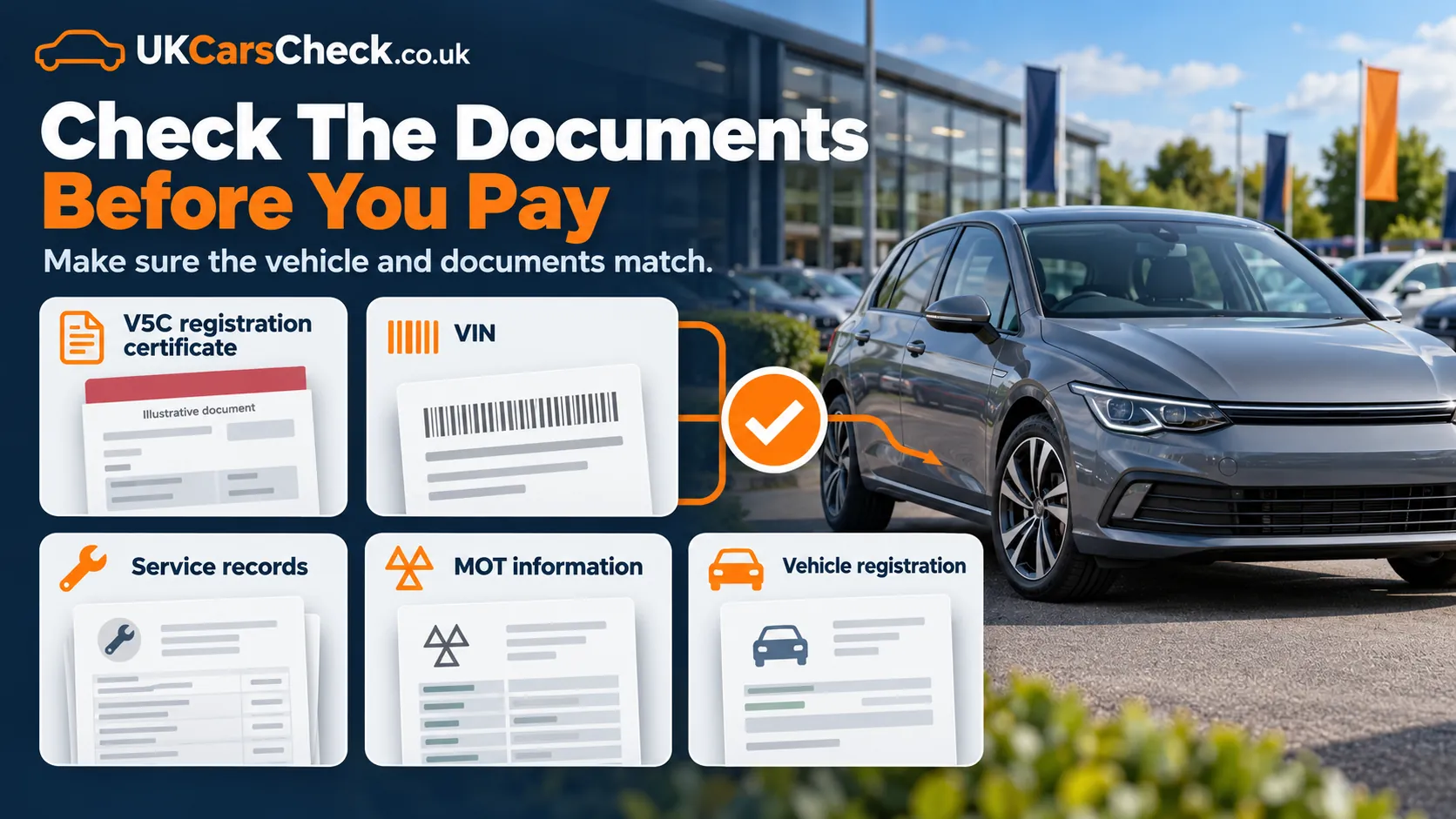
Compare important details with the vehicle, including:
- Registration
- Make and model
- VIN
- Other identifying information
Locate the VIN on the vehicle and ensure it corresponds with the documentation.
If information does not match, investigate before proceeding. GOV.UK's step-by-step guide to buying a vehicle explains the official checks and how to register a vehicle once you have bought it.
15. Perform a Final History Check Before Paying
Before transferring money, perform one final review.
Confirm:
- Registration details
- MOT history
- Mileage
- Vehicle-history information
- Finance information where available
- Write-off information
- Documents
- VIN
- Service history
- Seller details
- Agreed price
Do not let excitement about the vehicle cause you to skip the final checks.
A few minutes of verification before payment can prevent much larger problems later.
About to hand over your money?
Run a final check on the registration so you can confirm the available records still match what the seller has told you.
Used Car Buying Checklist Summary
Before buying a used car in the UK, check:
- ✓ Registration details
- ✓ Vehicle history
- ✓ MOT history
- ✓ Mileage
- ✓ Exterior condition
- ✓ Interior condition
- ✓ Electrical equipment
- ✓ Test-drive performance
- ✓ Service history
- ✓ Previous keeper information
- ✓ Market value
- ✓ Insurance costs
- ✓ Seller credibility
- ✓ V5C and VIN
- ✓ Final history information before payment
Common Used-Car Buying Mistakes
Some buyers focus almost entirely on appearance, mileage and price.
A safer approach is to consider the complete picture.
A shiny exterior does not tell you about outstanding finance or historical records, while a clean vehicle-history report does not replace a physical inspection.
Use both. Research the history and inspect the actual vehicle.
Frequently Asked Questions
What should I check before buying a used car in the UK?
Check the vehicle's registration details, MOT history, mileage, service records, physical condition, V5C, VIN and relevant vehicle-history information. You should also test drive the vehicle and compare its price with similar cars.
Should I check MOT history before buying a used car?
Yes. Previous MOT results and advisories can provide useful information about recurring defects, mileage progression and the vehicle's maintenance history.
How can I check whether the mileage looks genuine?
Compare the dashboard mileage with historical MOT readings, service records, invoices and available vehicle-history information. Unexpected inconsistencies should be investigated before purchase.
Is a vehicle history check worth doing?
A vehicle history check can provide information that a visual inspection cannot. It should be used alongside document checks, a test drive and, where necessary, a professional mechanical inspection.
What is the V5C?
The V5C is the vehicle registration certificate and records information about the vehicle and its registered keeper. It should be checked carefully when purchasing a used vehicle.
Should I buy a used car without a test drive?
Where possible, you should test drive the vehicle before buying. A test drive can reveal issues with the engine, gearbox, steering, brakes, suspension and other systems.
Final Thoughts
Buying a used car should not be rushed.
The strongest buying decision comes from combining three things:
- Vehicle-history research
- Documentation checks
- Physical and mechanical inspection
If anything does not match the seller's description, investigate it before handing over your money.
Before buying your next used vehicle, use UKCarsCheck to investigate its available history and make a more informed decision.
Check Your Vehicle Before You Buy
Enter a registration to review available MOT, mileage, finance and write-off records before you commit.