How To Check If A Car Has Outstanding Finance In The UK 2026
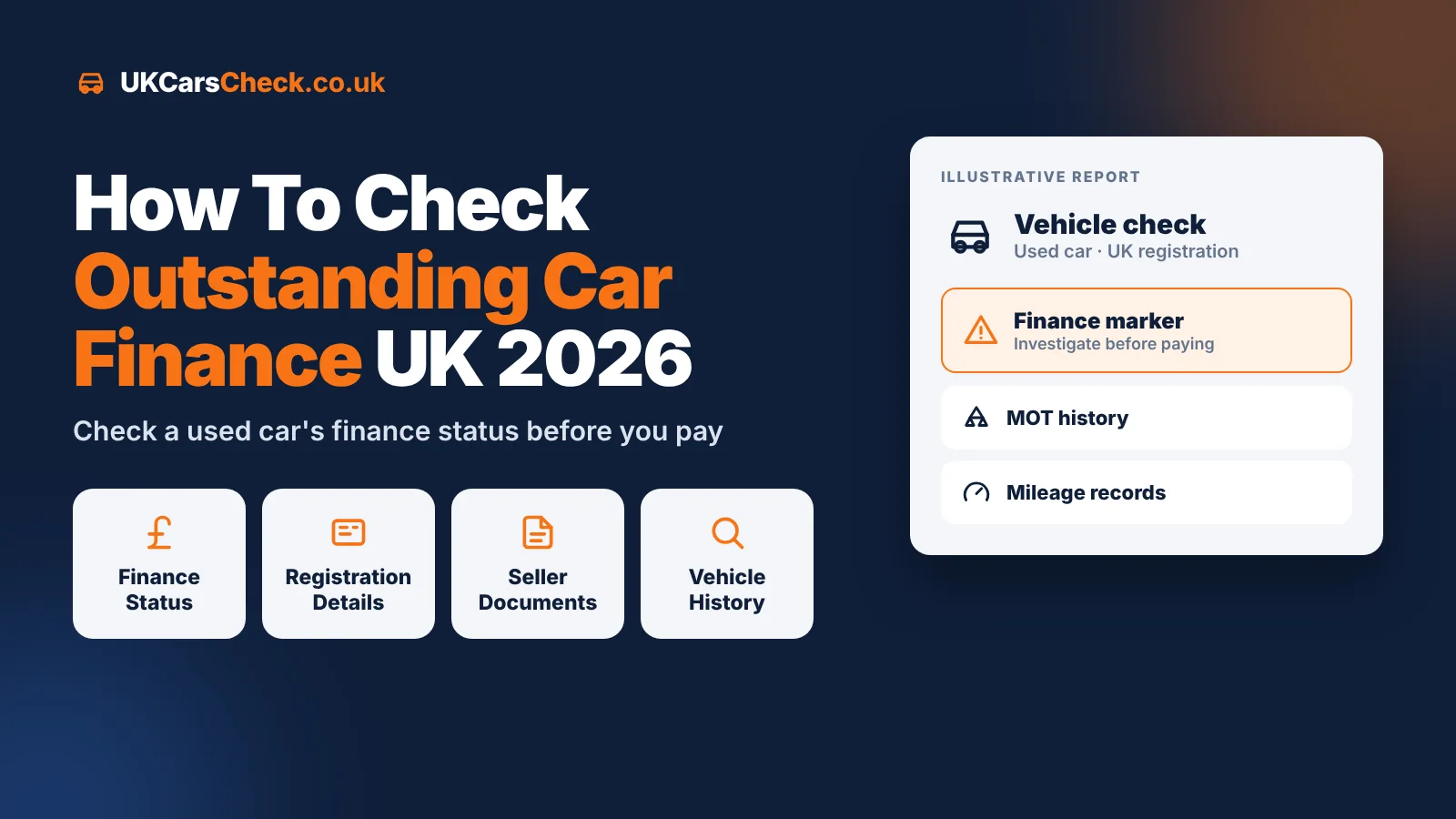
Outstanding finance is one of the most important things to check when buying a used car in the UK, and one of the easiest to miss. A car can be clean, well maintained and drive perfectly, yet still have money owed against it under a finance agreement taken out by a previous keeper.
You cannot see a finance agreement by looking at the paintwork, opening the bonnet or taking a test drive. It does not appear on the dashboard, and it is not shown on the V5C registration certificate. The only reliable way to investigate it is to check the vehicle's history before you pay and to ask the seller the right questions.
This guide explains what outstanding finance means, why it matters, how to check if a car has finance owing, and what to do if a finance warning appears.
What Does Outstanding Finance On A Car Mean?
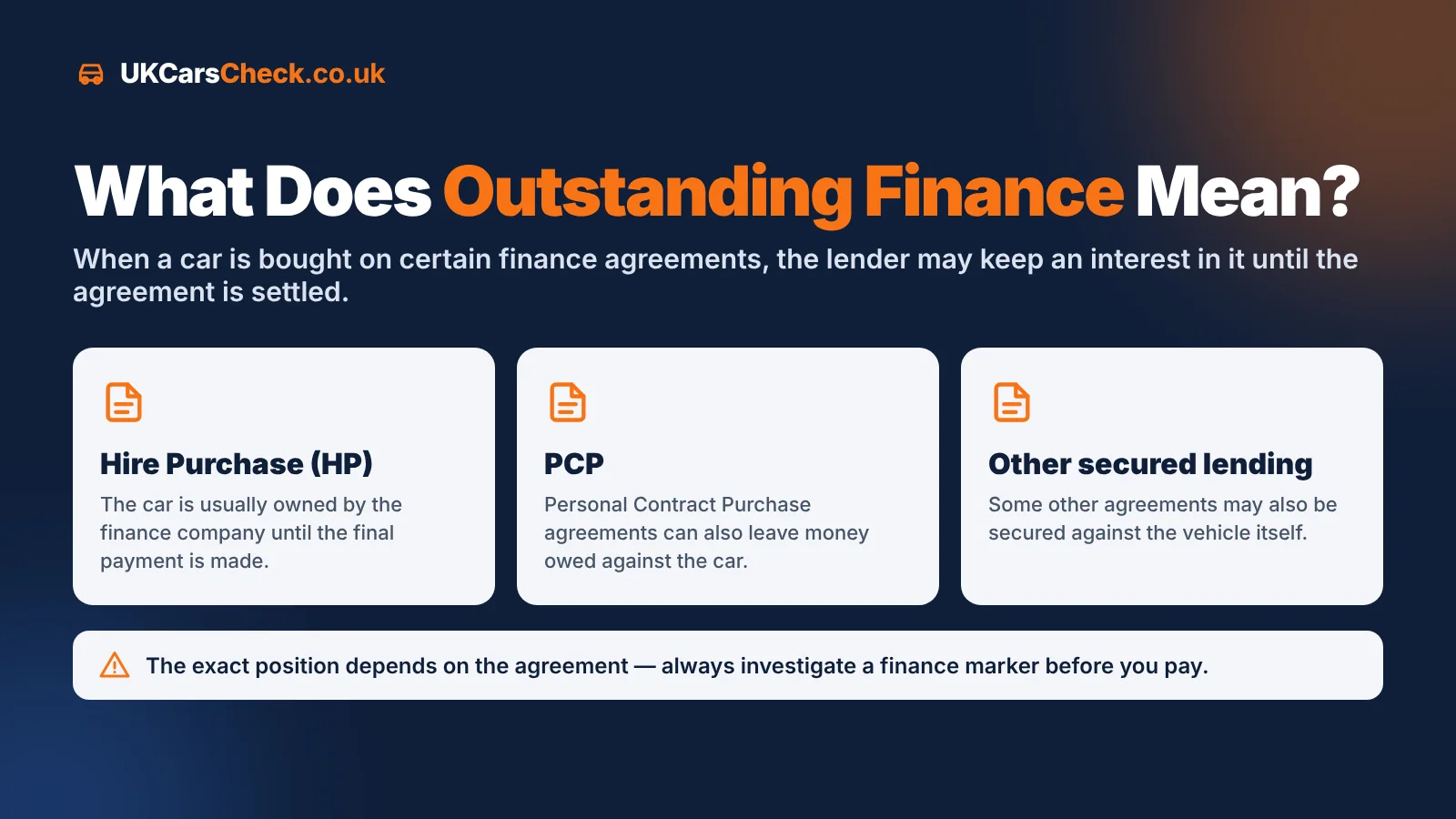
A car has outstanding finance when it was bought using a finance agreement that has not yet been fully paid off. The most common types linked to the vehicle itself are:
- Hire Purchase (HP) — you pay for the car in instalments, and the finance company normally owns it until the final payment is made.
- Personal Contract Purchase (PCP) — lower monthly payments with an optional final "balloon" payment. Until the agreement is settled, the finance company generally retains an interest in the car.
- Conditional sale and other secured lending — some other agreements, including certain loans secured against the vehicle, may also leave the lender with an interest in it.
An unsecured personal loan used to buy a car is different. That debt usually belongs to the borrower rather than the vehicle, so it is not normally what a finance check is looking for. The detail matters, because the exact position always depends on the type of agreement and its terms.
Why Is Outstanding Finance Important When Buying A Used Car?
If a car still has finance owing, the person selling it may not have the right to sell it free of that agreement. That can create serious problems for the buyer, including:
- The finance company trying to recover the vehicle or the money owed
- Disputes and delays that leave you unable to use or sell the car
- Difficulty insuring, selling or part-exchanging the car later
- Losing money you have already paid while the situation is resolved
What actually happens depends on the circumstances: the type of agreement, whether you bought privately or through a trader, and whether you knew about the finance. Some buyers are protected; others face a much harder situation. That uncertainty is exactly why it is worth checking before you hand over any money rather than trying to unpick the problem afterwards.
Found a car you like?
Before you agree a price or pay a deposit, check the vehicle's available finance, write-off and history records using its registration.
How To Check If A Car Has Outstanding Finance In The UK
A car finance check is quick, but it works best as part of a structured process rather than a single search. Follow these six steps.
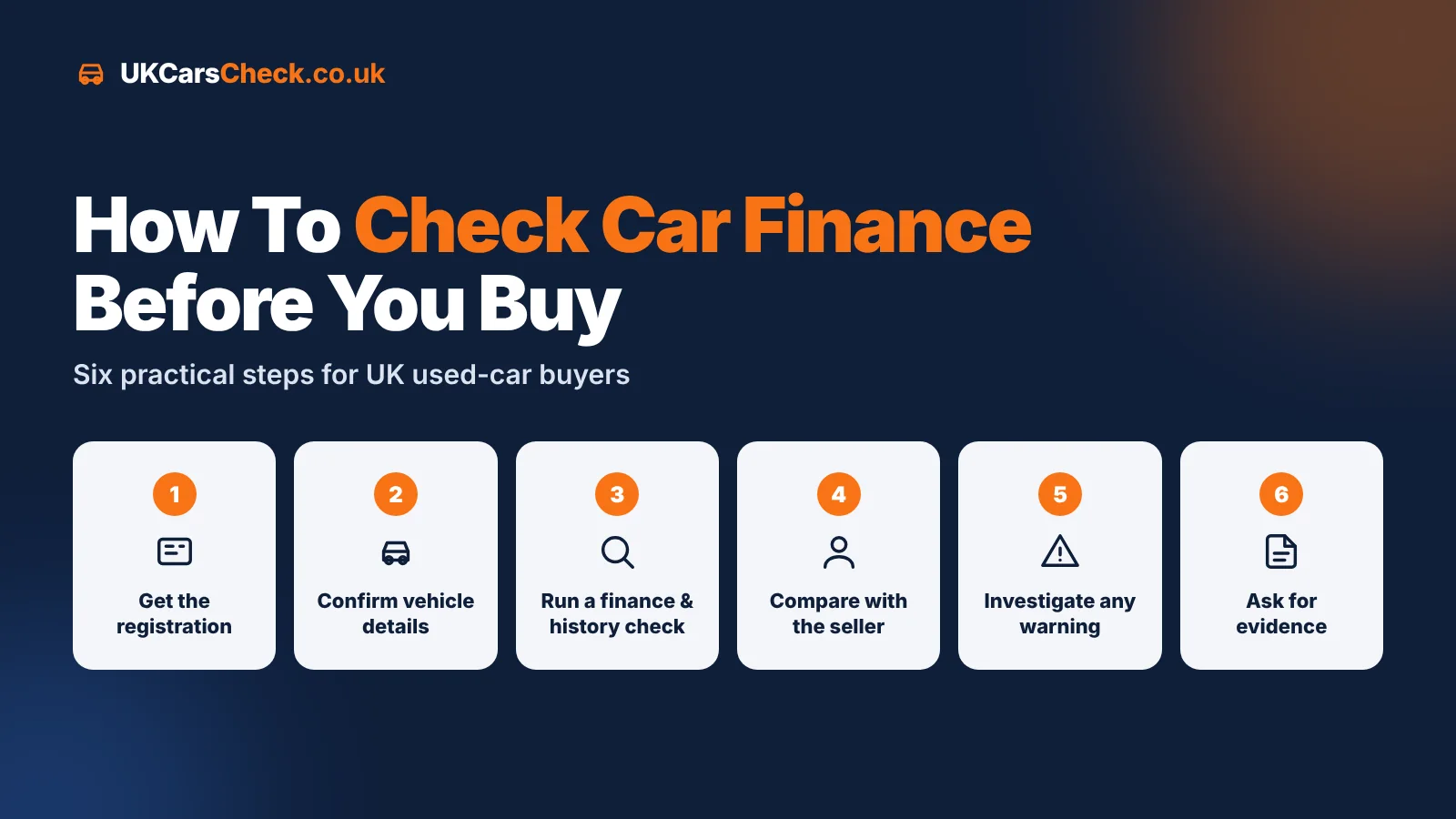
1. Get the registration number
Ask the seller for the full registration number before you travel to view the car. A genuine seller should have no reason to refuse. If they will only share it once you arrive, treat that as a reason to be more careful.
2. Confirm the vehicle details
Check that the make, model, colour, engine size and year of the vehicle match the advert. The free DVLA vehicle enquiry service on GOV.UK shows basic details such as tax status, MOT expiry, colour and the date the V5C was last issued. A mismatch here is worth questioning before you go any further.
3. Run an appropriate vehicle-history and finance check
Basic official information does not include outstanding finance, so you need a vehicle-history check that covers finance information. Depending on the report and the data available, this can also show insurance write-off records, stolen-vehicle records, mileage information and other history in one place.
4. Compare the result with the seller's information
Read the report alongside the advert and what the seller has told you. Do the mileage, the number of keepers and the vehicle details line up? If the seller says the car has "never been on finance" but the report shows a finance marker, you need an explanation before going any further.
5. Investigate any finance warning before paying
A finance marker does not always mean the car cannot be bought. Agreements are sometimes settled shortly before a sale, and records can take time to update. But you should never assume a warning is an error. Pause the purchase until you have clear evidence of what has happened.
6. Request supporting evidence where necessary
If finance has been, or will be, paid off, ask for written confirmation. Ideally this is a settlement letter from the finance company confirming the agreement has been settled in full. Check that the lender's name and the vehicle details match, and, where possible, verify it with the finance company using contact details you have found independently rather than ones supplied by the seller.
Can You Check Car Finance For Free?
It is important to separate free official information from specialist history checks, because they cover different things.
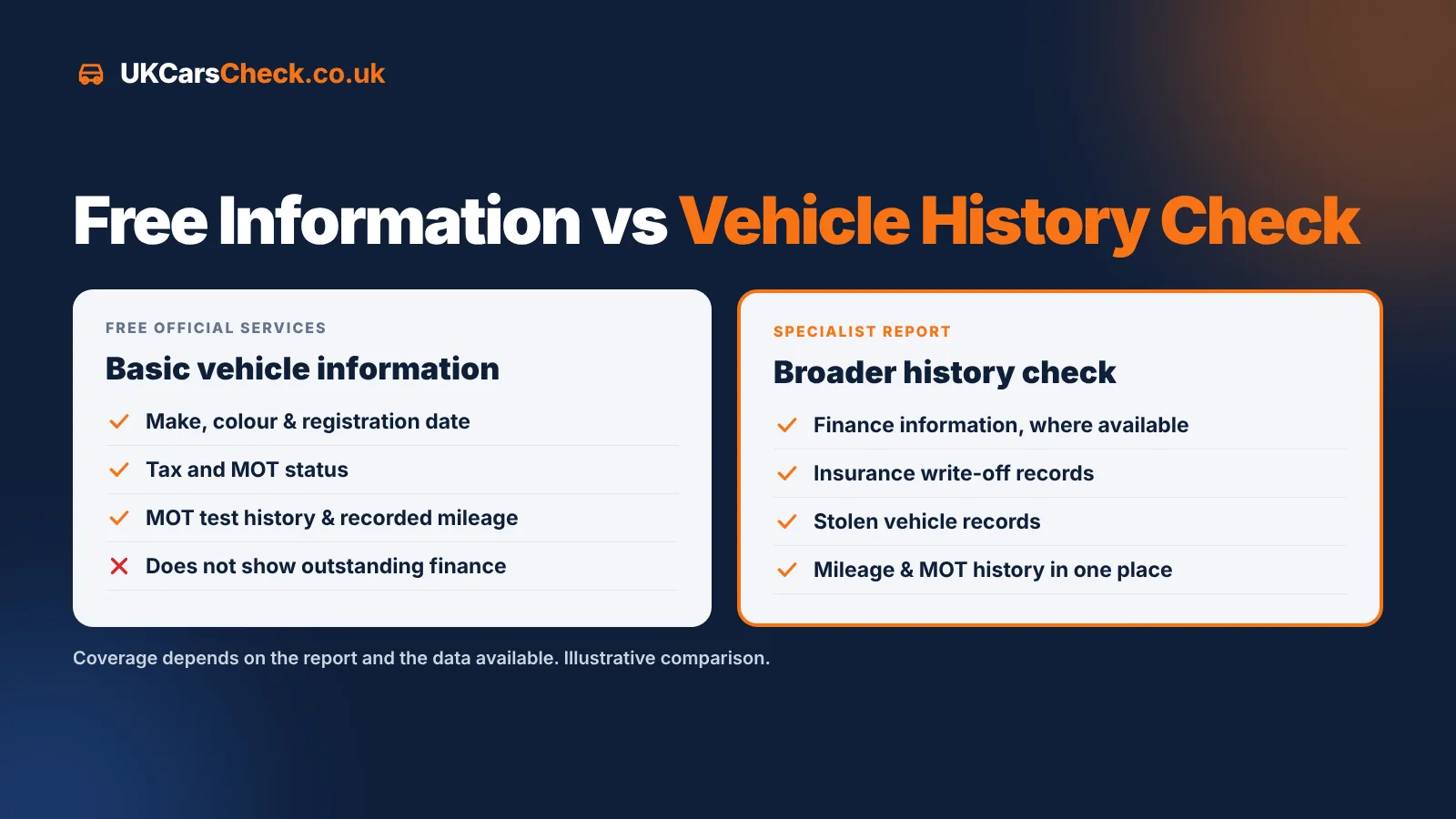
Free official services on GOV.UK are useful and worth using. You can look up basic vehicle details through the DVLA vehicle enquiry service, and you can view past test results and recorded mileage through the GOV.UK MOT history service. However, these services do not tell you whether a car has outstanding finance.
Specialist vehicle-history checks draw on additional data sources and can include finance information, write-off records and stolen-vehicle records, depending on the report and the data available. These are normally paid services, so it is worth comparing what each report level includes. You can view vehicle history report options to see what UKCarsCheck covers.
In short: use the free tools for what they do well, but do not rely on them alone to rule out finance.
What Information Do You Need For A Car Finance Check?
In most cases the registration number is all you need to start. It also helps to have:
- The vehicle's make and model, so you can confirm the result relates to the right car
- The mileage shown on the dashboard
- The VIN (Vehicle Identification Number), so you can check it matches the V5C and the car itself
- The seller's name and address, to compare with the V5C
- Any finance or settlement paperwork the seller has mentioned
What Should You Do If A Car Has Outstanding Finance?
If a check shows a finance marker, slow down. A sensible approach is to:
- Stop before paying anything. That includes deposits.
- Ask the seller to explain. Note exactly what they say and whether it matches the report.
- Ask for written evidence that the agreement has been settled, ideally a settlement letter from the lender.
- Verify the evidence independently by contacting the finance company through official contact details.
- Consider arranging settlement directly with the lender, so the amount owed is paid to the finance company before ownership changes hands, if the seller agrees.
- Walk away if you cannot get clear, verifiable answers.
Want finance information alongside the rest of the history?
Compare UKCarsCheck report levels to see which checks are included, from finance information to write-off, mileage and MOT records.
Can A Dealer Sell A Car With Outstanding Finance?
Dealers sometimes buy or take in part-exchange vehicles that still have finance owing, and it is common for them to settle the agreement as part of their process. That does not automatically mean anything is wrong.
What matters is that the finance is properly dealt with before or at the point of sale. If you are buying from a dealer, it is reasonable to ask:
- Has any finance on this vehicle been settled?
- Can you confirm that in writing?
- Will the car be sold free of any outstanding finance?
Buying from a business can give you additional consumer rights compared with a private sale, but the details depend on the circumstances. Checking the vehicle yourself is still worthwhile, because it gives you independent information rather than relying entirely on the seller.
What If You Already Bought A Car With Outstanding Finance?
If you discover finance on a car you have already bought, try not to panic, and avoid ignoring letters from a finance company. General steps that can help include:
- Gather everything: the advert, messages with the seller, the receipt, proof of payment and any history check you ran
- Contact the finance company to understand exactly what agreement is recorded and what they are asking for
- Contact the seller, or the dealer if you bought from a business, and explain the problem in writing
- Get independent advice — for example from Citizens Advice or a solicitor — before agreeing to anything
The outcome depends heavily on the facts. In some situations the law may protect a private buyer who bought in good faith without knowing about the finance; in others it may not. This article is general information, not legal advice, so it is important to get advice on your own situation.
Outstanding Finance vs Other Vehicle History Risks
Finance is one important risk, but it is not the only one. A thorough pre-purchase check also looks at:
- Stolen history — whether the vehicle is recorded as stolen.
- Insurance write-off or category history — whether the car has previously been declared a write-off, which can affect value, insurance and safety.
- Mileage inconsistencies — readings that go backwards or jump unexpectedly between records.
- MOT history — past failures, repeated advisories and recorded mileage.
- VIN and document inconsistencies — details on the V5C that do not match the car in front of you.
For a wider look at what to check before buying, see our complete used car buying checklist.
Buying Privately vs Buying From A Dealer
Private sales can offer good value, but you usually have fewer protections, and finance problems can be harder to resolve. With a private sale, it is especially important to:
- View the car at the address shown on the V5C
- Check the seller's name matches the registered keeper, or get a clear explanation if it does not
- Run a finance and history check before you agree a price
- Pay using a traceable method
Dealers generally have more established processes, and buying from a business may give you additional rights. Even so, it is sensible to ask about finance directly and to run your own check rather than relying solely on assurances.
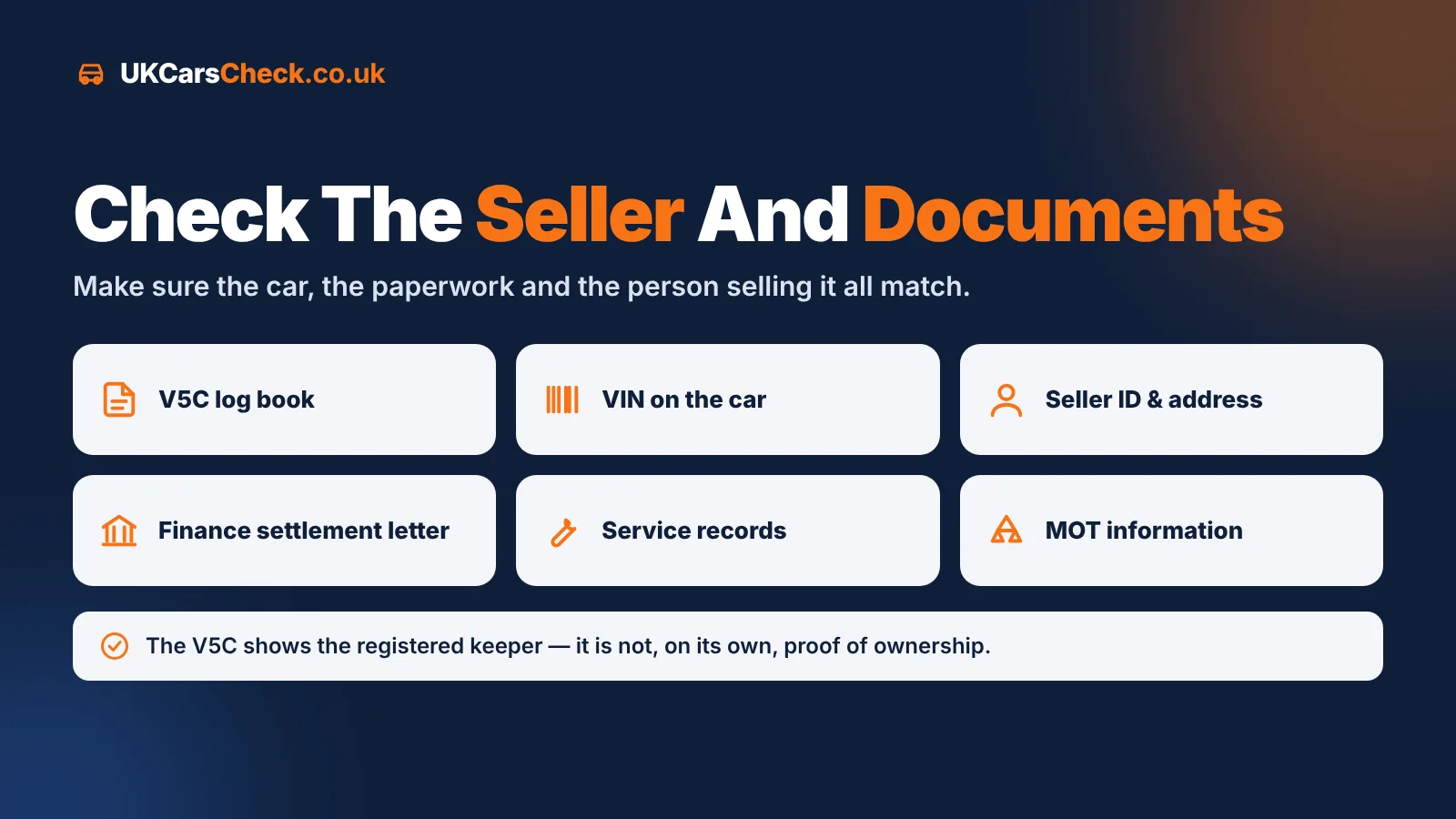
Whoever you buy from, the V5C is an important document to check, but remember it shows the registered keeper and is not, on its own, proof of ownership. GOV.UK's step-by-step guide to buying a vehicle explains the official checks and what to do with the V5C once you have bought the car.
Red Flags To Watch For Before Paying
The following warning signs do not automatically mean a seller is dishonest or that a car has finance owing. They are reasons to slow down and investigate:
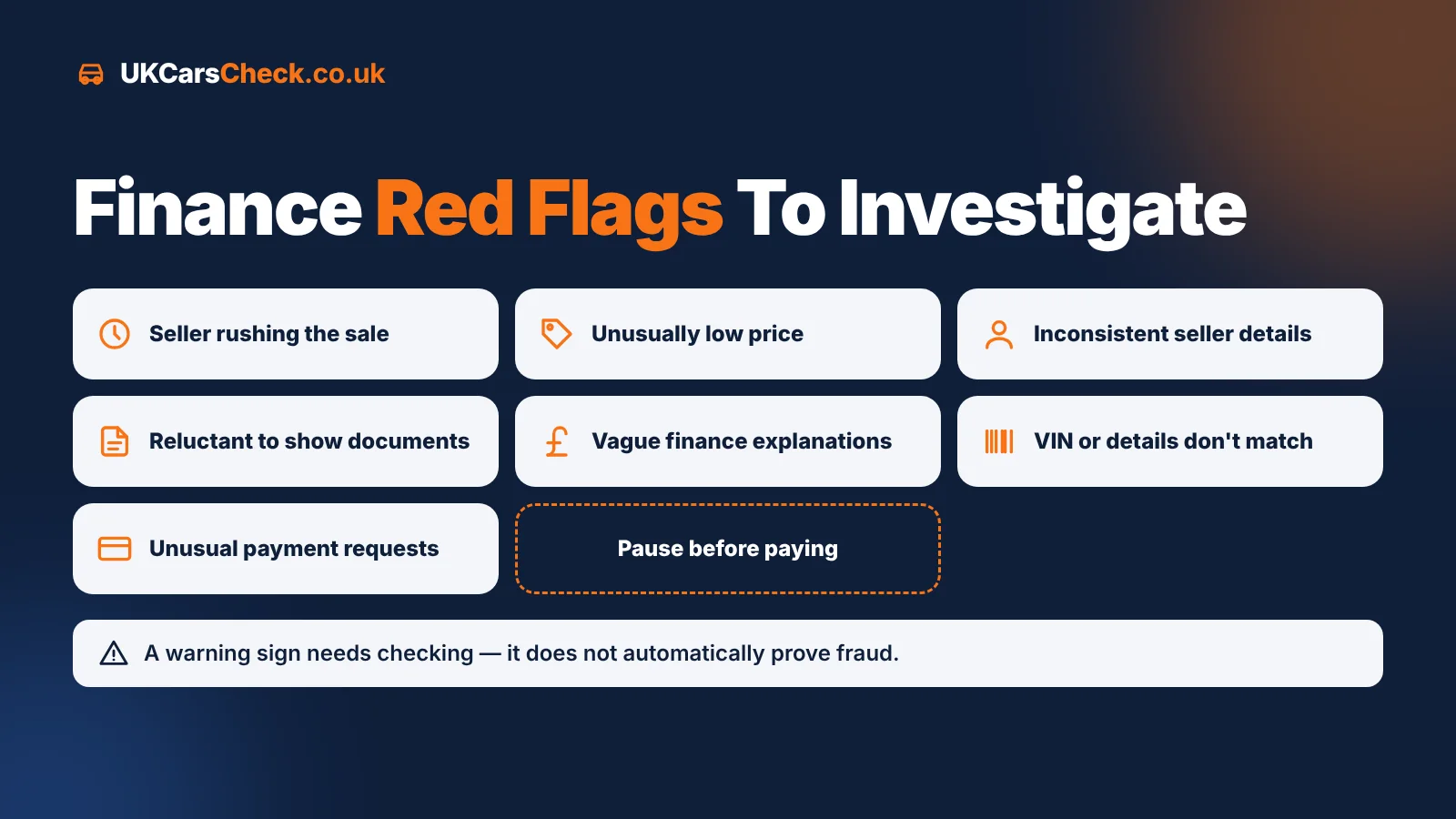
- The seller is rushing the sale — pressure to decide or pay immediately.
- An unusually low price — well below comparable cars without a convincing reason.
- Inconsistent vehicle or seller information — details that change or do not match the advert.
- Reluctance to provide documents — no V5C, no service history or excuses about paperwork.
- Unsupported finance explanations — "it's been paid off" with no evidence to back it up.
- VIN or details inconsistencies — a VIN that does not match the V5C, or signs of tampering.
- Unusual payment requests — cash only, payment to a third party or pressure to pay before viewing.
Simple Pre-Purchase Finance Checklist
Before you pay for a used car, make sure you can tick off each of these:
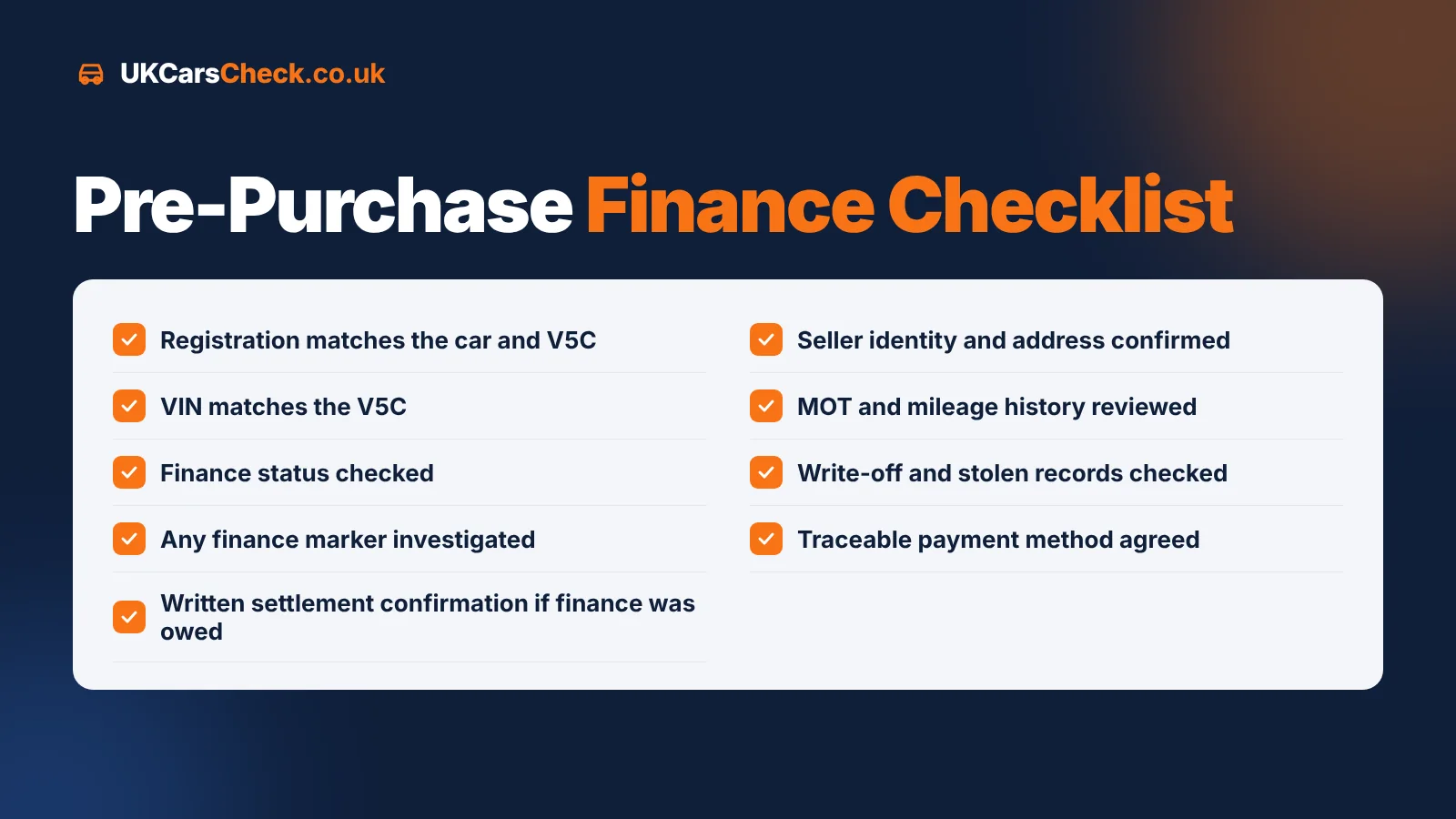
- ✓ The registration on the car matches the advert and the V5C
- ✓ The VIN on the car matches the V5C
- ✓ The finance status has been checked
- ✓ Any finance marker has been explained and investigated
- ✓ Written settlement confirmation has been obtained and verified, if finance was owed
- ✓ The seller's identity and address have been confirmed
- ✓ The MOT history and recorded mileage have been reviewed
- ✓ Write-off and stolen-vehicle records have been checked
- ✓ A traceable payment method has been agreed
Frequently Asked Questions
How do I check if a car has outstanding finance in the UK?
Get the registration number, confirm the vehicle details, then run a vehicle-history check that includes finance information. Compare the result with what the seller has told you and investigate any finance marker before paying.
Can I check outstanding car finance for free?
Free GOV.UK services show basic vehicle details and MOT history, but they do not show outstanding finance. Finance information is normally provided through specialist vehicle-history checks, which are usually paid services.
What happens if I buy a car with outstanding finance?
It depends on the circumstances, including the type of agreement, who you bought from and whether you knew about the finance. Outcomes vary, so if this happens, contact the finance company and get independent advice.
Is an MOT check the same as a finance check?
No. An MOT history check shows test results, advisories and recorded mileage. It does not show whether money is owed on the car.
Should I buy a car if a finance marker appears?
Not until you understand it. Ask the seller for an explanation and written evidence that the finance has been settled, verify it with the lender, and walk away if you cannot get clear answers.
Can a vehicle history check show outstanding finance?
Many vehicle-history checks include finance information, depending on the report and the data available. No check can guarantee a car is problem-free, so use it alongside document checks and an inspection.
Should I check finance when buying from a dealer?
Yes. Dealers commonly settle finance on cars they sell, but checking for yourself and asking for written confirmation gives you independent reassurance.
Final Advice Before Buying A Used Car
Outstanding finance is invisible on the forecourt, so it needs to be checked deliberately. Get the registration early, check the vehicle's history, compare what you find with what the seller tells you, and do not pay until any finance warning has been properly explained and verified.
A vehicle-history report is one part of good due diligence. Combine it with careful document checks, a physical inspection and a test drive, and if something does not add up, take your time or walk away.
Check The Car Before You Complete The Purchase
Enter the registration to review available finance, write-off, mileage and MOT records before you hand over any money.